These practical habits can help stretch your food budget further—while also reducing the amount of perfectly good food that ends up in the trash.
If you’ve been to the grocery store recently, you’ve probably felt it: that sharp sting at checkout when the total somehow feels higher than expected. You’re not imagining things. Food prices have jumped significantly in recent years, making groceries one of the fastest-growing household expenses for many families.
At the same time, there’s another, quieter problem happening alongside rising prices. A surprisingly large share of the food we buy never gets eaten. In the U.S., an estimated 30–40% of all food ends up in landfills. Once there, it decomposes and releases methane—a greenhouse gas far more potent than carbon dioxide.
The good news is that these two problems are deeply connected in a positive way. When households get better at actually using the food they buy, the savings can be substantial. Research suggests a typical family of four could save around $1,500 per year simply by reducing food waste. That’s real financial relief—especially for households where groceries already consume a large portion of monthly income.
Here are nine practical, research-backed ways to spend less on groceries while making better use of what you already have.
1. Start With Meal Planning (Even If It’s Not Exciting)
Meal planning may not sound glamorous, but it’s one of the most effective tools for saving money on food. Environmental scientist Heather White calls it “the least sexy climate solution”—and that’s precisely what makes it powerful.
By planning meals ahead of time, you take control of what goes into your cart. You’re far less likely to buy ingredients that don’t fit together or end up forgotten in the fridge. Meal planning also reduces the temptation to default to takeout or expensive convenience foods when you’re tired and unsure what to cook.
You don’t need an elaborate spreadsheet. Even a simple weekly plan that answers “What’s for dinner?” can remove stress and prevent last-minute spending.
2. Take Inventory Before You Shop
Before you plan meals or make a shopping list, pause and take stock of what you already have. Look in your fridge, freezer, and pantry—all of it.
This step prevents one of the most common money-wasting habits: buying duplicates. It’s easy to grab another bag of spinach or a second bottle of sauce, only to discover the original hiding in the back later.
Visibility matters. Move foods with the shortest shelf life—berries, leftovers, fresh herbs—to eye level so you’re reminded to use them. Small changes like this help combat what many people experience as “fridge blindness,” where food disappears simply because it’s out of sight.
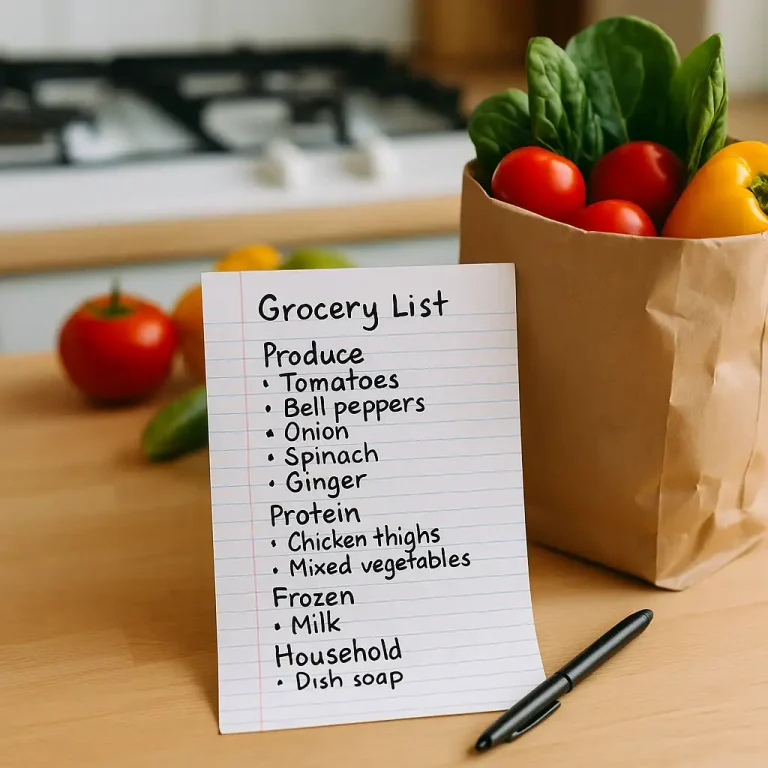
3. Make a Shopping List—and Actually Stick to It
Once you know what you already have, your shopping list should only fill in the gaps. Nothing more.
Impulse buys are one of the fastest ways grocery budgets unravel. That specialty cheese or new snack might look appealing in the moment, but if it wasn’t part of your plan, it often ends up uneaten.
A list works best when it’s accessible to everyone in the household. A shared notes app, a whiteboard in the kitchen, or even a paper list on the fridge can help keep everyone aligned.
One simple behavioral trick: try shopping after you’ve eaten a satisfying meal. When you’re full, you’re far less likely to buy impulse foods—and more likely to stick to your plan.
4. Shop In Person When Possible
Online grocery ordering is undeniably convenient, but it often comes at a cost. Shopping in a physical store gives you more control over prices and quality.
In-store shopping makes it easier to compare unit prices and spot deep discounts, particularly in clearance sections. These areas often include perfectly good produce, baked goods, or dairy items nearing their quality date—all available at significant markdowns.
Buying these items is a double win: you save money immediately and help prevent food from being wasted simply because it didn’t sell fast enough.

5. Buy in Bulk—but Be Selective
Bulk buying can save money and reduce packaging, but only when done deliberately. Not all bulk items are actually cheaper, and large quantities only make sense if you’ll use them.
Foods with long shelf lives—such as grains, beans, cereals, and spices—are usually good bulk candidates. Before purchasing, check the unit price and compare it to smaller packages. Sometimes the perceived “deal” isn’t a deal at all.
Also ask yourself how often you truly use the item. Buying a large container of something you reach for once every few months often leads to waste rather than savings.
6. Shop Local and Seasonal When You Can
Food that travels shorter distances often costs less to transport—and that savings can show up at checkout. Locally grown, seasonal produce is typically fresher, lasts longer, and can reduce waste at home.
Shopping locally also encourages seasonal eating, which naturally aligns your meals with what’s plentiful and affordable at the moment. Many farmers markets now accept benefits such as WIC, SNAP, and EBT, making fresh, local food more accessible to families with tighter budgets.
Fresher food lasting longer means fewer trips to the store and less money lost to spoilage.
7. Get the Most Out of Every Ingredient
Reducing waste in the kitchen starts with small, mindful habits. Leftovers shouldn’t be an afterthought—they’re tomorrow’s lunch or the base for a new meal.
When prepping fruits and vegetables, trim only what’s truly unusable. Many parts we toss—like carrot ends, onion skins, and herb stems—still have value. Collect these scraps in a freezer bag and use them to make homemade stock.
Once the scraps have given up their flavor, they can be composted. This “full life cycle” approach ensures you extract as much value as possible from the food you buy.
8. Make the Freezer Your Best Friend
The freezer is one of the most effective tools for saving money on food. It pauses spoilage, preserves leftovers, and provides an easy alternative to eating out on busy nights.
Batch-cooked meals like soups, stews, and casseroles freeze exceptionally well. Portion them ahead of time so you can reheat exactly what you need.
For smaller items, get creative. Chopped herbs in olive oil, leftover wine for cooking, or fresh lemon juice can all be frozen in ice cube trays. These “flavor cubes” capture freshness and prevent small amounts of food from being wasted.
9. Learn to Ignore “Best By” Dates
This final tip often produces the biggest savings—and it requires a mindset shift.
Most date labels on food products reflect quality, not safety. Terms like “Best By,” “Best if Used Before,” or “Freeze By” indicate when food may taste its best—not when it becomes unsafe to eat.
In fact, the only date that legally indicates food safety in the U.S. applies to infant formula. For everything else, your senses are usually a better guide.
Look for visible mold, smell the food, and note changes in texture. Items like pasta, rice, crackers, and canned goods often remain safe for long periods if the packaging is intact. Trusting your judgment instead of automatically discarding food can save hundreds of dollars per year.
The Bigger Picture
Taken together, these habits combine deliberate planning with smarter consumption. They target the foods we waste most—meat, vegetables, and dairy—which also tend to be the most expensive items in the cart.
By using what you buy, stretching each ingredient further, and resisting unnecessary discard, you address three challenges at once: rising food costs, household financial pressure, and environmental impact.
Saving money on groceries doesn’t require extreme measures. Often, it’s the small, consistent choices that quietly add up—to real savings, less waste, and a more intentional relationship with food.