If there’s one habit that changed the way I shop, cook, and even feel about my weekly routine, it’s meal planning.
Not in a “perfect Pinterest board” kind of way.
Not in a “cook every meal from scratch like a superhero” kind of way.
I’m talking about realistic, flexible, imperfect meal planning — the kind that helps you stretch your groceries, reduce waste, and stop staring into your fridge wondering, “What am I even doing for dinner tonight?”
The more I looked into food waste and rising grocery costs, the more I realized something almost ironic:
Most of us are not wasting food because we don’t care. We’re wasting food because we don’t have a plan.
And the research backs that up. Households that plan meals waste dramatically less food, spend less money, and deal with less mealtime stress. Honestly, the benefits surprised me.
Let’s break it down — gently, simply, and in a way that actually fits real life.
Why Meal Planning Matters More Than Ever
Food prices have gotten wild lately. I don’t need to show you a graph — your receipts probably say enough.
At the same time, we know from USDA estimates that 30–40% of food in the U.S. ends up in landfills. Once it hits the landfill, it breaks down and creates methane, a powerful greenhouse gas.
So here’s the upside:
If we get better at actually using the food we buy, we’re not just helping the environment — we’re helping our wallets, too.
Meal planning is the simplest way to connect these two things:
Less waste → less spending → less stress.
The Real Benefits of Meal Planning (and Why It Works So Well)
1. It cuts your grocery costs without cutting quality.
When you know what you’re cooking, you stop buying random ingredients “just in case.”
You buy exactly what you need — nothing extra that will wilt or expire before you use it.
2. It reduces food waste naturally.
Meal planning makes you more aware of what you already have.
No more forgotten bags of spinach hiding in the back of the fridge.
3. It reduces decision fatigue.
You know that feeling at 6 p.m. when your brain is done for the day and the easiest option is takeout?
Meal planning protects you from that moment.
4. It helps create healthier, more intentional meals.
No guilt, no pressure — meal planning just makes it easier to choose balanced meals because you already set yourself up for it.
How to Start Meal Planning (Even If You’ve Never Done It Before)
Let me say this upfront:
Meal planning is not about perfection. It’s about direction.
Here’s the approach that actually works in normal, busy, real-life households:
Step 1 — Start With What You Already Have
This is where planning really begins.
Take a quick look in your fridge, freezer, and pantry. Not a deep clean — just a scan.
What ingredients need to be used soon?
What leftovers can be repurposed?
What foods do you keep accidentally rebuying?
This step alone can save you money instantly.
Step 2 — Choose Your Meal Planning Style
Not everyone needs a Monday-to-Sunday plan.
Pick the style that feels doable:
- Traditional weekly plan
- Theme nights (Soup Night, Pasta Night, Grain Bowl Night)
- Batch-cook plan
- Flexible hybrid (my favorite — structured but not strict)
The right plan is the one you can actually follow.
Step 3 — Pick 3–4 Core Recipes You Love
Not seven brand-new recipes.
Not aspirational five-step gourmet meals.
Just a few realistic meals that:
- You already know how to cook
- Use ingredients you like
- Create leftovers
- Fit your schedule for the week
That’s enough for most people.
Step 4 — Add a “Use It Up” Meal
This is a game-changing habit.
Choose one night each week where you intentionally use food that’s close to spoiling or just awkwardly sitting around.
Stir-fries, egg scrambles, pasta, soups — almost anything works.
This one night alone can dramatically reduce what ends up in your trash.
Step 5 — Plan for Leftovers on Purpose
Leftovers shouldn’t be accidental.
They’re a strategy.
Double a recipe.
Cook extra rice.
Make a large pot of soup on Sunday.
Tomorrow’s lunch becomes free, easy, and zero-waste.
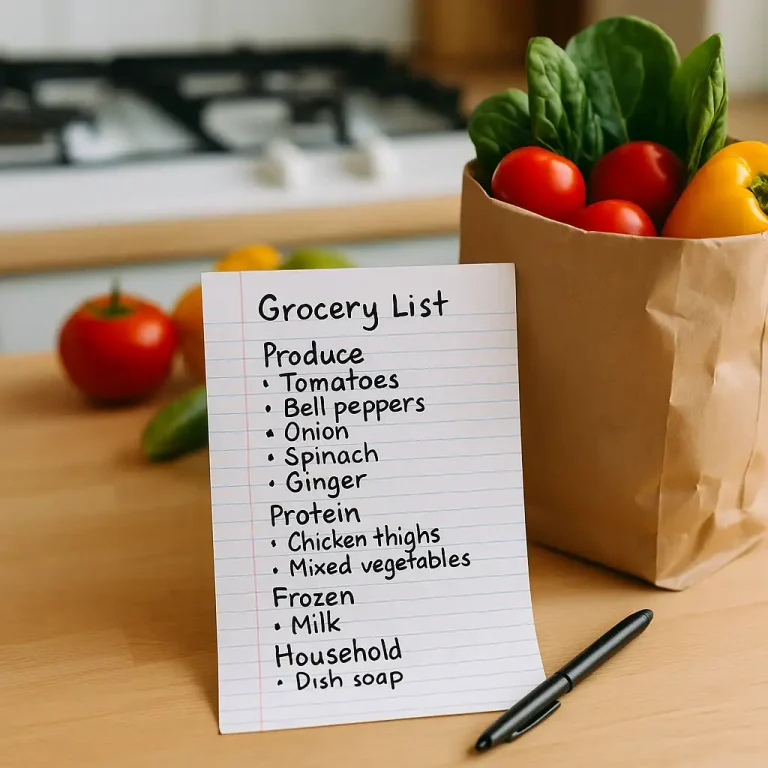
Step 6 — Turn Your Plan Into a Surgical Shopping List
Only add what you don’t already have.
This is where meal planning and shopping lists become best friends — and where most of the savings actually happen.
Shopping with intention is the fastest way to stop impulse purchases and food waste before it starts.
Meal Planning on a Budget: Simple Ways to Stretch Your Money Further
Use seasonal, local produce.
Cheaper, fresher, lasts longer.
Build meals around affordable staples.
Rice, pasta, beans, eggs, lentils, frozen vegetables — all low-cost, high-flexibility items.
Cook once, repurpose twice.
Example:
Roast chicken → tacos → broth.
Veggie tray → stir-fry → fried rice.
Use frozen + fresh together.
Frozen produce lasts longer and offers great quality at a lower price.
Tools That Make Meal Planning Easier (And Less Overwhelming)
1. A simple weekly meal planner
Digital or paper — whatever you’ll actually use.
2. A “Use First” bin in your fridge
Everything that needs attention goes here.
3. A shared grocery list
Everyone at home can add items so nothing gets forgotten.
4. A freezer cheat sheet
Know what you can freeze, for how long, and how to thaw quickly.
Common Meal Planning Mistakes (and How to Fix Them)
Mistake 1 — Trying to plan every single meal.
Leave room for flexibility. Life happens.
Mistake 2 — Choosing complicated recipes.
Keep it simple. Save the fancy stuff for weekends.
Mistake 3 — Forgetting to check ingredients first.
This leads to duplicate purchases… and waste.
Mistake 4 — Ignoring leftovers.
Leftovers are part of the plan, not a bonus.
A Simple 7-Day Sample Meal Plan (Budget-Friendly + Zero Waste)
Nothing fancy — just realistic, wholesome meals:
- Mon: One-pot lentil soup + crusty bread
- Tue: Veggie stir-fry using leftover produce
- Wed: Pasta night with a use-it-up sauce
- Thu: Leftover soup or stir-fry
- Fri: Homemade pizza with leftover veggies
- Sat: Chicken or tofu bowls
- Sun: Batch-cook chili (freezer portion included)
Final Thoughts: Meal Planning Isn’t About Being Perfect — It’s About Being Prepared
If there’s one takeaway, it’s this:
Meal planning is a kindness you give your future self.
It saves you money, reduces waste, and brings a calm rhythm back into your kitchen. You don’t need color-coded charts. You don’t need chef-level skills. You just need a simple plan and the willingness to try.
And once you feel how much easier your week becomes?
You’ll wonder how you ever lived without it.