You’ve been there. You walk into the grocery store with a short list and an optimistic mood. Forty-five minutes later, you’re standing at the checkout line, staring at the total that somehow tripled. You double-check the cart—no steakhouse cuts, no luxury chocolates, nothing extravagant—yet the receipt scrolls longer than your last power bill.
That’s grocery inflation in disguise. Prices haven’t just crept up on big-ticket items; it’s the everyday stuff—the milk, the bread, the spinach—that quietly adds ten here, five there, until “just a few extra pesos” turn into hundreds by month’s end. And the tricky part? You often don’t notice until the card swipe is done and the budget tracker later reminds you that you overspent—again.
So you try the usual fixes: more coupons, switching supermarkets, buying in bulk, or even skipping your favorite coffee as if that will make a dent. But most of these feel like short-term patches that drain energy more than they save cash. What if the real solution isn’t about chasing cheaper items or fighting for discounts but about how you plan your groceries altogether?
The surprising truth is that grocery savings start in your mind, not your wallet. Once you rethink the way you approach the entire shopping experience—from how you organize the week’s meals to how you scan your shelves—you’ll realize that the biggest savings come not from price tags, but from decisions made before you even grab the cart.
The Psychology of Grocery Spending
Ever noticed how a “quick stop for milk” somehow turns into a full shopping trip? That’s not random—it’s by design. Grocery stores are carefully engineered to make you linger and spend just a little more than planned. The essentials like milk and eggs are often placed at the back, making you walk through aisles filled with temptations first. Snacks and new products sit at eye level where your attention naturally lands, while the cheaper or store-brand versions crouch down low. There’s even a calculated rhythm behind the upbeat music—it slows your pace so you don’t rush through.
Then there’s scent. The aroma of freshly baked bread near the entrance isn’t accidental. It activates comfort and hunger, nudging you to add more to your cart “because you deserve it.” The layout, lighting, even the sample stations—all of it plays to your senses. You’re not just shopping; you’re walking through a soft, psychological maze.
Add in how most of us actually feel when we shop—tired after work, rushed between errands, maybe a bit hungry or stressed—and you’ve got the perfect setup for emotional autopilot shopping. That’s when your brain defaults to easy, familiar rewards instead of rational decisions. You grab the frozen pizza instead of planning dinner, toss in extra snacks “just in case,” and skip checking your inventory at home because that takes energy you don’t have in that moment.
I’ll admit, it happens to me too. I remember one night stopping just to buy pasta and sauce. Ten minutes later, I was lugging out a cart full of “extras” I convinced myself were practical—olive oils on sale, a new kind of cheese, even fancy napkins. Nothing wildly expensive, yet the total had doubled. What really happened wasn’t financial; it was emotional. I was tired and wanted a small mood boost, and the store delivered exactly that.
The first step to saving isn’t a new app or coupon—it’s awareness. You can’t change what you don’t see. Once you start noticing how and why you shop, you’ll realize the power to save has been in your habits all along.
The Real Surprise — You Save More by Changing the Plan, Not the Price
Here’s the twist that surprises most people: real grocery savings rarely come from chasing discounts. They come from changing your system. Coupons, store apps, and flash deals feel productive—but they often distract from the smarter, quieter move: planning your grocery rhythm before you even set foot in the store.
Think of two shoppers. The first is a “deal hunter.” She scrolls through store flyers, hunts digital coupons, and shifts between supermarkets depending on this week’s promotions. Her cart often looks different every trip because what she buys depends on what’s on sale. The total fluctuates wildly, too. Some weeks feel like wins, but others blow up the budget with extras that simply looked like bargains.
The second shopper keeps a simple plan. She knows her go-to meal basics, does a quick kitchen check before heading out, and keeps a short list built around what’s actually missing. She doesn’t get seduced by “Buy 2 Get 1 Free” tags because she’s focused on what supports her week, not what the store promotes. The result? Her total stays consistent, her pantry rarely goes to waste, and her stress level is lower because decisions are made before the temptation starts.
Over time, that small difference—plan versus react—creates a quiet, compounding effect. Planning neutralizes impulse, which means fewer “extras” sneaking into the cart. You’re not cutting joy or treats out of your week; you’re simply cutting chaos.
The surprising way to spend less isn’t about changing where you shop, but how you think. When you trade price-chasing for system-building, you start buying with intention instead of emotion. And that shift, more than any discount app, protects both your wallet and your mental bandwidth.

Build a 7-Minute Grocery Game Plan
Saving on groceries doesn’t mean hours of planning or complex spreadsheets. The secret is a simple, repeatable routine you can do in just seven minutes each week — before your next store trip.
Start by checking your pantry and fridge. Instead of focusing on what’s missing, base your meal plan around what’s already there. That half-bag of rice, the can of beans, or last week’s forgotten veggies aren’t just leftovers; they’re the foundation of your next few meals. Planning this way reduces waste and saves money by stretching what you’ve already bought.
Here’s a quick routine:
- Take out your phone and open your notes app, WhatsApp, or whichever messaging platform you like to use. Some people even keep photos of their pantry or fridge on their phone for a quick visual check.
- Scan what you have, and mentally map out 3 to 5 meals using those ingredients. For example, if you have canned tomatoes and chicken breasts, plan a pasta dish or stew you can whip up easily.
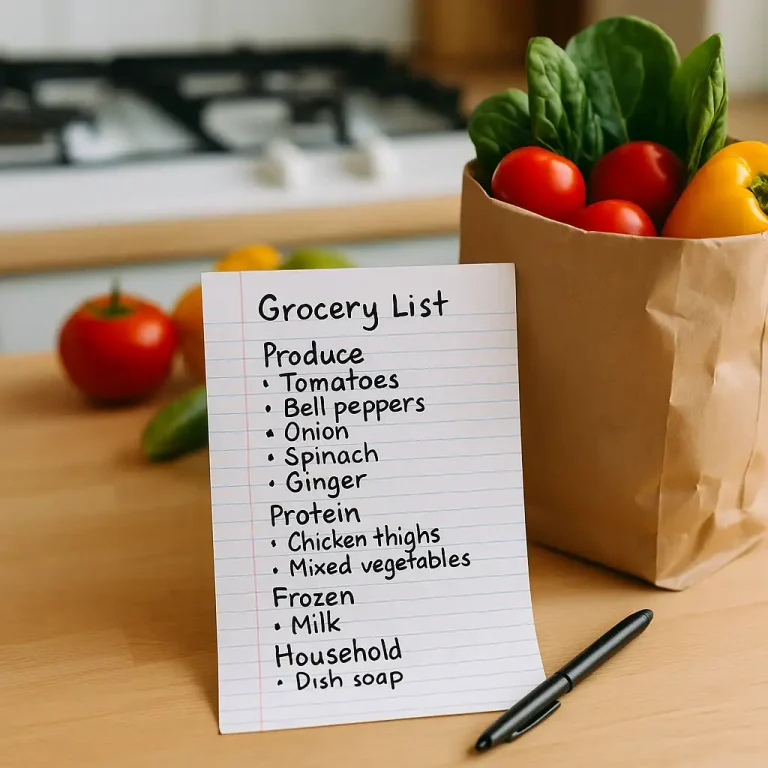
- Create a short list on your phone for what you absolutely need to buy—just the essentials to fill in gaps, like fresh salad greens or milk.
Real life shows this works. One friend shared how shifting to this quick habit changed her weekends. Instead of wandering aisles cold and lost, she spends minutes scrolling through her pantry photos and jotting down a plan for the week. The result? Fewer trips, less food tossed out, and a clearer budget that doesn’t sneak away under her feet.
Here’s a challenge: before your next grocery run, spend seven minutes building your grocery game plan. Snap a quick photo of your shelves, write your meal ideas, and list only what you really need. Notice how much smoother shopping becomes—and how much more confident you feel controlling your spending without cutting out the food you love.
Master “The Shelf Audit” Before You Shop
A “shelf audit” sounds fancy, but it’s really just a simple habit of checking your fridge, pantry, and cupboards before heading out for groceries. This quick scan helps you see what you already have, preventing those all-too-common moments of buying duplicates—like yet another bottle of the same sauce, spices, or snacks you meant to use up first.
When you do a shelf audit, you catch gaps and leftovers before they sneak into your shopping list. It’s especially helpful for items we forget about easily, such as spices that get lost in the back of the shelf or snacks tucked away out of sight. Keeping a small list or note of these frequently forgotten items lets you buy only what’s truly needed instead of doubling up.
Beyond saving money, this habit builds gratitude awareness. When you look over your shelves carefully, you often realize you already have more than enough. That container of rice, a dozen canned beans, or the pasta you forgot about—it’s all a storehouse of meals waiting to happen. This perspective shifts shopping from a frantic quest for missing things into a resourceful act of putting together what you already own.
By mastering the shelf audit, you reduce waste and improve your grocery game plan. You become more intentional with each purchase, leaving the store with confidence instead of confusion or regret over forgotten item piles at home.
Try adding a shelf audit to your weekly routine. Make it part of your grocery preparation ritual, and watch how smoothly your shopping trips start to go—not just for your wallet, but for your peace of mind.
Shop by Category, Not by Aisle
A common reason grocery shopping balloons into overspending is the traditional aisle-by-aisle browsing. Walking down every aisle means you’re constantly exposed to new and tempting products that catch your eye and pull you off your planned path. This distraction often leads to grabbing items you didn’t intend to buy, simply because they’re within reach.
A more effective approach is to organize your shopping list by category—proteins, grains, produce, dairy, extras—rather than by store aisles. When you shop with categories in mind, you zero in on what you need without wandering aimlessly. This method controls mental fatigue by reducing the overload of choices and keeps your focus sharp on what’s truly essential for your meals.
Imagine skipping entire aisles of snacks or sodas because your list doesn’t include them. You might be surprised how quickly your cart size shrinks and your budget breathes a sigh of relief.
One shopper shared how this simple shift transformed her trips: “I learned to group my list by category, and instead of flipping through every aisle and picking up every discount, I went straight to what I needed. Skipping aisles felt strange at first, but after a while, I noticed that I didn’t miss those impulse buys at all—and my grocery bills dropped.”
By shopping category-first, you don’t just save money; you sharpen your shopping discipline. The power of skipping aisles teaches you to trust your list, resist distractions, and build lasting grocery habits that protect your budget and time.
Embrace the “Leftover Revolution”
Leftovers often get a bad rap, but embracing them can become your secret weapon in saving on groceries. Instead of viewing leftovers as yesterday’s food, think of them as free meals waiting to happen—an untapped resource that cuts your grocery costs and reduces waste.
For example, that roast chicken from dinner can quickly transform into quesadillas, salads, or a tasty pasta sauce for lunch the next day. Leftover veggies can be blitzed into soups or stirred into stir-fries, and even day-old bread can become croutons or breadcrumbs for future recipes.
To keep this habit working smoothly, label your storage containers with what’s inside and the date it was cooked or stored. This simple step makes it easy to remember and prioritize leftovers before they turn forgotten and spoiled. You can even keep a small whiteboard or note on your fridge listing leftover items to nudge yourself toward using them up.
Adopting the leftover mindset not only saves money by stretching your ingredients but also dramatically cuts down food waste—a win-win for your budget and the environment. Over time, you’ll likely find your grocery shopping shifts focus from “buy more” to “reuse smart,” giving you more control over your food and finances.
Use “Soft Tracking” Instead of Rigid Budgets
When it comes to grocery budgeting, the idea of strict numbers and cutthroat discipline can feel daunting and discouraging. That’s why “soft tracking” offers a kinder, more sustainable approach. Instead of rigidly restricting your spending, soft tracking encourages awareness—simply noticing where your money goes without judgment.
One easy way to start is to keep a basic grocery notebook or use a simple app to log your purchases over time. Rather than tracking every peso or dollar, focus on 3 to 4 main categories like fresh foods, pantry staples, treats, and extras. This approach helps reveal surprising spending patterns hidden in plain sight—maybe it’s that weekly yoghurt habit or occasional impulse snack runs that quietly add up.
Emotional spending is real: comfort snacks after a rough day or treats during social gatherings show up on your grocery bill. Recording these moments honestly lets you connect spending with feelings, turning vague guilt into mindful choices. Are those ice cream runs really saving your mood, or just adding stress later? Noticing this can help you make small, intentional changes over time.
Remember, soft tracking isn’t about perfection or policing yourself but about learning and growing financially. Those small moments of awareness add up, giving you control and peace of mind about your grocery spending.
Make “Money Habits” Part of Family Culture
Grocery shopping isn’t just a solo mission; it’s a reflection of your family’s shared values and priorities. When money habits become part of your family culture, everyone benefits—not just your budget but your relationships and daily rhythm.
Simple habits like a family fridge board to track what’s available or a shared meal planning list can transform the way everyone feels about food and money. Assigning rotating meal planning or grocery duties encourages participation and teaches responsible habits naturally. Kids and partners become active collaborators, learning to spot deals or plan menus together rather than relying on one person to manage it all.
This teamwork builds pride and a sense of calm control over money stress. When everyone understands the “why” behind choices, it becomes easier to stay on track and support each other instead of feeling like budgeting is a burden. You’re not just saving money—you’re building stronger connections and a healthier relationship with money as a family.
Redefine Value Beyond Price
Saving money on groceries isn’t just about buying the cheapest items—it’s about making intentional choices that reflect your values and goals. Sometimes, what feels like a splurge—buying fresher produce or local brands—actually leads to long-term savings when you consider health benefits, taste satisfaction, and less waste.
This shift invites you to think in terms of “value-per-use.” Instead of buying cheap items that spoil quickly or don’t satisfy, investing in higher-quality foods or ingredients means you buy once and enjoy many uses. For example, a sturdy bottle of olive oil or a bag of organic vegetables might cost more upfront but last longer or inspire healthier meals, saving both money and disappointment down the line.
Try this practical challenge: next time you shop, reflect on one item you buy regularly that might cost you more emotionally or financially than it’s worth. Could it be an impulse snack, a brand you don’t love, or a product that goes to waste? Reconsidering that purchase with intention can free up money and space for things that genuinely add value to your life.
By redefining value like this, saving becomes less about sacrifice and more about alignment—between what you buy, how you use it, and how it supports your well-being
The Grocery Reset Challenge
Ready to take control and boost your grocery savings? Try the 7-day “Grocery Reset Challenge.” It’s a simple way to break old spending habits and build mindful grocery routines that last.
Here’s the plan: for one week, track everything you spend on groceries to spot patterns. Plan just three intentional meals each day, focusing on making the most of what you already have at home before buying more. This keeps your shopping targeted and reduces waste.
Journaling or sharing your experience—whether with friends, family, or online communities—can boost motivation and help you celebrate small wins along the way.
Remember, mindful changes don’t need to be perfect to work. When you consistently practice intentional grocery habits, even small steps compound quickly into big savings and less stress. Give yourself the grace to learn and grow—and watch your wallet and your well-being benefit together.
You’re Not Just Saving on Groceries—You’re Saving Headspace
Taking control of grocery spending extends well beyond saving money—it creates space in your mind and reduces decision fatigue. When you adopt mindful, intentional habits like planning meals, tracking your pantry, or embracing leftovers, you lighten the mental load of everyday choices. These practices diminish feelings of guilt, stress, and the overwhelm that often accompany budget management.
Recall the opening idea: the surprising “way” wasn’t about coupons or discounts; it was about cultivating calm, conscious habits. With each mindful decision, you build confidence and peace of mind, knowing your spending aligns with your true priorities. Over time, shopping becomes less about reacting to every sale or impulse and more about a clear, steady rhythm that supports your well-being.
You’re not just saving on groceries—you’re building grocery wisdom. This isn’t about restriction but about empowering yourself with knowledge, intention, and purpose. Every small mindful step adds to a greater sense of control and satisfaction, creating lasting change that benefits your wallet and your mental health alike.